Hot water is one of those things that homeowners rely on every day but rarely think about until there is a problem.
The shower turns cold too fast, the water takes longer to heat, the tank starts making weird noises, there is water near the unit or one morning, there is no hot water at all. When that happens the logical question in your mind quickly becomes: can the water heater be repaired, or is it time to replace it?
We wrote this to help you make some decisions based on what you’re experiencing. The right answer between repair or replacement depends on the age of your unit, the type of issue, the condition of the tank, how often problems happen, and whether the system still meets your household’s needs. Water heating also affects energy use. The U.S. Department of Energy says water heating accounts for about 18% of home energy use and is typically the second-largest energy expense in a home. Here is what Charlotte area homeowners should know before making the decision.
Key Takeaways
- A newer water heater with a minor, isolated issue may be worth repairing.
- An older unit with leaks, corrosion, or repeated problems may be better to replace.
- A leaking tank is usually more serious than a loose connection or valve issue.
- Rust-colored hot water, rumbling noises, or inconsistent hot water can point to larger system problems.
- A professional inspection can help protect your home from water damage, unnecessary repairs, and premature replacement.
Repair vs. Replacement: What Is the Difference?
Water heater repair is fixing a specific problem with the existing unit which may include replacing a component, addressing a connection issue, checking an electrical concern, diagnosing a gas or tankless system issue, or resolving a performance problem. Water heater replacement means removing the old unit and installing a new one, which may make more sense when the tank is leaking, the system is older, repairs are becoming more frequent, or the unit no longer provides enough hot water for the home.
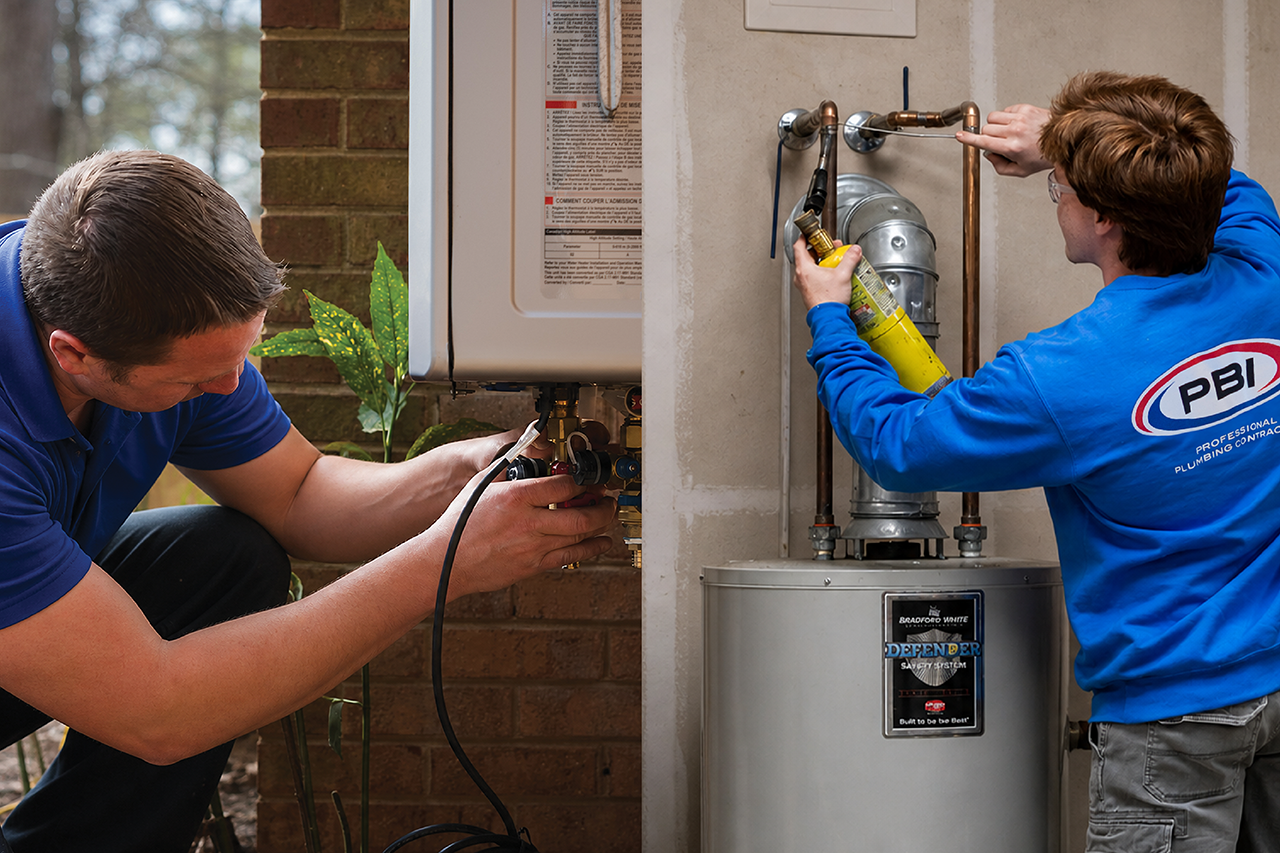
PBI’s residential plumbing team provides water heater repair as part of its residential services, and we install, maintain, repair, and replace water heaters.
When Water Heater Repair May Make Sense
Repair may be the right next step when the problem is specific, the unit is not too old, and there are no signs of tank failure or major corrosion. Below are common things our customers have experienced and what you can do to identify the problem, and your next steps.
- You have no hot water, but the cause may be simple – A complete loss of hot water can feel urgent, but the cause is not always major. PBI’s homeowner FAQ notes that a complete loss of hot water usually indicates a water heater problem.
- For electric water heaters, homeowners can check whether the breaker has tripped.
- For gas tank water heaters, homeowners can check whether the gas valve is fully open.
- For tankless water heaters, homeowners can turn the hot water faucet fully on and check the front panel for error codes.
- What to check first: Identify whether your system is electric, gas, or tankless. Check for obvious items like a tripped breaker or an error code, but do not attempt electrical, gas, or internal repairs yourself.
- The water heater is newer and has had few problems – If the unit is relatively newer and this is the first issue, repair may be the more practical option. A failed part, minor connection issue, thermostat problem, or other isolated concern may not mean the entire system needs to be replaced.
- What to check first: Look for the manufacturer label or installation date if available. If the unit has been reliable until now, a technician can help determine whether a repair is reasonable.
- The issue is limited to one fixture – Sometimes the water heater is not the actual problem. If one shower, sink, or faucet is having trouble with hot water, but the rest of the home is working normally, the issue may be related to that fixture, a valve, a cartridge, a flow restrictor, or the distance from the water heater.
- PBI’s FAQ explains that hot water delivery can vary based on distance from the water heater, pipe diameter, insulation, and flow restrictors.
- What to check first: Test hot water at several fixtures. If only one area is affected, make a note of where the problem is happening before calling for service.
- There is a repairable component issue – Some water heater problems are tied to parts or settings, not the full system. A plumber can inspect the unit and determine whether the issue is connected to a thermostat, heating element, valve, connection, burner, control panel, or other serviceable component.
- What to check first: Write down what you are noticing: no hot water, not enough hot water, water too hot, inconsistent temperature, noise, water near the unit, or an error code.
When Water Heater Replacement May Be the Better Option
Replacement may be the smarter decision when the unit is older, unsafe, leaking, corroded, inefficient, or no longer meeting the home’s needs.
- The tank is leaking – Water around the base of a tank water heater should not be ignored. Some leaks may come from a valve or connection, but a leaking tank can indicate internal failure. Once a tank itself is compromised, replacement is often the safer and more practical path.
- What to do next: If you see water around the unit, do not wait. Turn off water to the unit if you know how to do so safely, protect the surrounding area, and call a plumbing professional.
- The hot water looks rusty or discolored – Rust-colored hot water may point to corrosion inside the tank or another issue in the plumbing system. If discoloration only appears when using hot water, the water heater should be inspected. Corrosion can eventually lead to leaks, water quality concerns, and system failure.
- What to do next: Check whether the discoloration appears from hot water only or from both hot and cold water. That detail can help a plumber narrow down the source.
- The unit makes rumbling or popping noises – A noisy water heater may be dealing with sediment buildup. In areas with hard water, minerals can collect inside the tank over time. That can make the system work harder, reduce performance, and contribute to wear.
- What to do next: Do not ignore new or worsening sounds. A technician can inspect the unit and determine whether maintenance, repair, or replacement makes more sense.
- You keep running out of hot water – If your household has changed, your water heater may no longer be the right fit. A growing family, added bathroom, new soaking tub, larger shower, or remodel can increase hot water demand. In some cases, the existing unit may be working, but it is no longer sized for the way the home is used.
- What to do next: Pay attention to when the hot water runs out. If it happens during normal daily use, the issue may be capacity, performance, or system sizing.
- Repairs are becoming more frequent – One repair may be manageable. Repeated repairs are different. If you are calling for service again and again, replacement may provide better long-term value and more peace of mind than continuing to fix an aging or unreliable system.
- What to do next: Look at the pattern. If the same issue keeps coming back, or if new problems keep appearing, ask whether replacement would be the more stable solution.
- You are already remodeling or upgrading plumbing If you are renovating a bathroom, kitchen, laundry area, or utility space, it may be worth evaluating the water heater at the same time. PBI’s renovation and remodel services are built around plumbing upgrades, system reconfigurations, modern layouts, current standards, and long-term performance.
- What to do next: If plumbing work is already being planned, ask whether the current water heater still supports the home’s layout, fixtures, and future use.
What to Consider Before Replacing a Water Heater
If replacement is the right choice, the next decision is what type of system makes sense for the home. The Department of Energy recommends considering fuel type, availability, cost, size, and energy efficiency when selecting a new water heater. Homeowners may need to compare:
- Tank water heaters
- Tankless water heaters
- Electric water heaters
- Gas water heaters
- Heat pump water heaters
- Available space and venting requirements
- Household hot water demand
- Energy efficiency
- Installation requirements
- Long-term operating costs
ENERGY STAR notes that a certified electric heat pump water heater can save a household of four approximately $600 per year compared with a standard electric water heater, and more than $4,500 over its lifetime.
That does not mean every home needs the same solution because the right water heater should fit the home, the household, the plumbing system, and the owner’s goals.
What Homeowners Can Check First
- Confirm whether the issue affects the whole home or only one fixture.
- Check whether the water heater is electric, gas, or tankless.
- For an electric water heater, see whether the breaker has tripped.
- For a gas tank water heater, check whether the gas valve is fully open.
- For a tankless water heater, look for an error code on the front panel.
- Look for water around the base of the unit.
- Notice whether the hot water is rusty, cloudy, or has an unusual smell.
- Listen for rumbling, popping, or other new sounds.
- Check whether hot water runs out faster than it used to.
- Locate the installation date or manufacturer label if possible.
Do not attempt to repair electrical components, gas lines, internal tank parts, or pressure-related components yourself.
When to Call PBI
Call PBI if your water heater is not producing hot water, is leaking, is making unusual noises, is delivering rusty or discolored hot water, or is no longer keeping up with your household’s needs. PBI can inspect the issue, explain whether repair or replacement makes more sense, and help protect your home’s plumbing system from larger problems. This is especially important if you notice:
- Water around the unit
- No hot water throughout the home
- Hot water that runs out quickly
- Rust-colored hot water
- Rumbling, popping, or banging sounds
- A tankless error code
- Repeated water heater issues
- A water heater connected to an upcoming remodel or plumbing upgrade
Contact Us to Schedule a Visit
FAQs
- Should I repair or replace my water heater? Repair may make sense if the unit is newer, the issue is isolated, and there are no signs of leaking, corrosion, or repeated failure. Replacement may be better if the tank is leaking, the unit is older, hot water is unreliable, or repairs are becoming frequent.
- What are signs my water heater needs repair? Common signs include no hot water, inconsistent hot water, water that is too hot or not hot enough, unusual noises, visible water near the unit, or an error code on a tankless system.
- What are signs my water heater should be replaced? Replacement may be needed if the tank is leaking, hot water is rusty or discolored, the system is no longer meeting household demand, or the unit keeps needing repairs.
- Why do I have no hot water? A complete loss of hot water usually points to a water heater issue. Depending on the type of unit, it may be related to a tripped breaker, gas supply issue, tankless error code, failed component, or other system problem.
- Can hard water damage a water heater? Hard water can contribute to mineral buildup inside plumbing systems and appliances. Over time, that buildup can affect performance and may contribute to water heater issues.
- Is tankless better than a tank water heater? It depends on the home. Tankless systems can be a good option for some households, but the right choice depends on hot water demand, fuel type, installation requirements, space, efficiency goals, and budget.
- Who should I call for water heater repair in Charlotte? Call a licensed plumbing professional if your water heater is leaking, not producing hot water, making unusual sounds, showing an error code, or no longer meeting your household’s needs. PBI provides residential plumbing service, including water heater repair and replacement.