
Hard water can damage appliances, leave residue on dishes, sinks and showers, and become a major nuisance for homeowners. In this blog, our plumbing experts explain what hard water is and how to protect your home from its effects.
What is Hard Water?
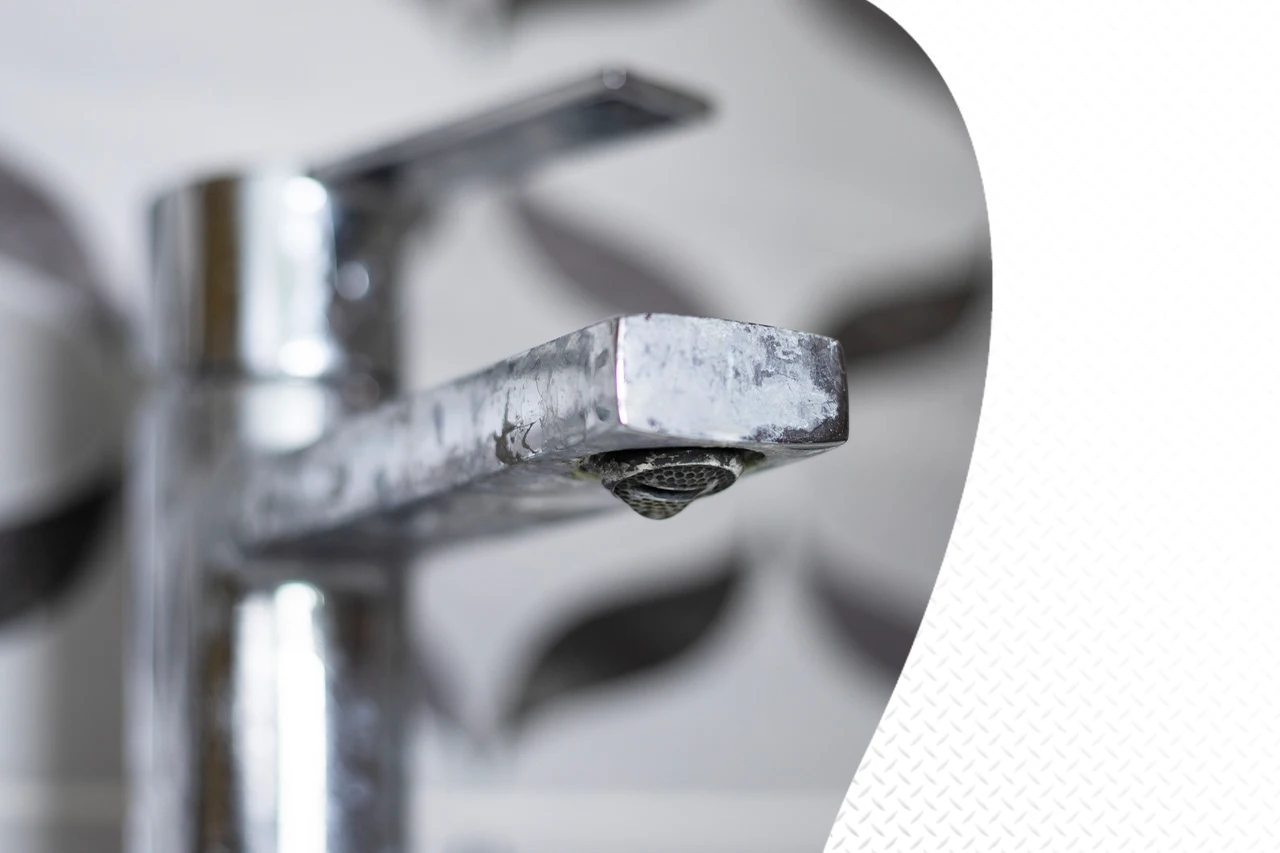
If you’ve ever noticed a cloudy, white layer accumulating in your shower, on your dishes or around your coffee machine, that’s hard water at work. Hard water contains high levels of dissolved minerals, particularly calcium and magnesium. When the water evaporates, these minerals are left behind, gradually building up and potentially damaging pipes and appliances.
How is Hard Water Measured?
Water hardness is determined by the amount of dissolved calcium and magnesium it contains. It’s typically measured in:
- Parts per million (ppm) or milligrams per liter (mg/L): This unit measures the mass of mineral content per volume of water. One mg/L equals one milligram of mineral per liter of water.
- Grains per gallon (gpg): This older measurement expresses hardness in grains of dissolved minerals per US gallon of water. One gpg equals about 17.1 ppm.
According to the United States Geological Survey:
- Soft: 0-60 mg/L
- Moderately Hard: 61-120 mg/L
- Hard: 121-180 mg/L
- Very Hard: >180 mg/L
Impacts of Hard Water
While hard water isn’t considered a health risk for most, it can affect your home in multiple ways:
- Skin and hair: Hard water can upset your skin’s pH balance, leaving it dry and itchy. It can also make your hair dull and may contribute to acne or mild digestive issues in sensitive individuals.
- Coffee machines: Limescale can clog a coffee machine’s inner valves and tubing, reducing water flow and straining your machine. Hard water may also give coffee a metallic or chalky taste.
- Dishes and dishwashers: Minerals can leave dishes cloudy and create a soapy film inside the dishwasher, including the heating element, pump and spray arms, forcing the machine to work harder, use more energy and sometimes run a second cycle.
- Clothing and laundry machines: Hard water deposits make fabrics stiff, dull colors and turn whites dingy. Limescale can coat the washing machine’s drum, pipes and heating element, forcing it to work harder and sometimes requiring a second wash.
- Plumbing systems: Hard water leaves scale on fixtures and, inside pipes, reduces water flow, lowers pressure and can eventually cause corrosion, blockages, leaks or bursts.
How to Protect Your Home
A skilled plumber can prevent and reverse the negative effects of hard water using these three methods:
- Removing mineral buildup
- Replacing corroded plumbing
- Installing a water softener or conditioning system
Removing mineral buildup
Plumbers can descale pipes, fixtures and appliances damaged by hard water using specialized tools like hydro-jetting to remove stubborn limescale. They can also professionally flush your water heater tank to remove sediment, improving the heater’s efficiency and extending its lifespan.
Repair and replacement services
If corrosion is significant, a plumber can replace old metal pipes with durable, flexible materials like PEX. This eliminates existing water damage and prevents future issues. Faucets, showerheads and other plumbing fixtures damaged by mineral deposits can also be repaired or replaced.
Water treatment system installation
The most effective long-term solution is installing a whole-house water softener on your main water line. Most water softeners use ion exchange to remove calcium and magnesium, replacing them with sodium or potassium ions. A plumber can help choose the right size and type for your household, ensuring it adheres to building codes.
Salt-free water softeners are an alternative for homeowners who want to avoid adding sodium. They alter the chemical structure of hard minerals, so they don’t stick to pipes and surfaces, though they are often less effective for extremely hard water.
Reverse osmosis systems are another option, using a semipermeable membrane to remove impurities, including hard minerals, from drinking water. While more expensive, they provide the highest level of filtration.
Think You Have Hard Water? Here’s Where to Start
If you suspect hard water is harming your home, call PBI. Our plumbers can test your water hardness, inspect pipes with a camera for corrosion or mineral buildup and recommend the best solutions for your needs. Early action can prevent costly damage; don’t wait to protect your home!
Get in touch with our team by emailing [email protected] or filling out this form today.